BECAUSE THE QUALIFIER "MOON" USED BY THE MOST FAMOUS OLFACTORY FAMILIES IS ACCUSED OF DISCRIMINATION IN THE UNITED STATES, THE CONTROVERSIAL SEMANTICAL ISSUE IS MAKING AN INDUSTRY OF SENSORY SENSATION INSANE.
Laurence Férat
It all began last summer, following an article in Harper’s Bazaar: “Why do we continue to classify some perfumes as oriental?” Asked, the expert Tania Sanchez replied, not without controversy: “Orient comes from a word that means “is.” The question is: where is it from?” In this case, from France, where the perfume genre was born. This vague, always exotic and mysterious orient includes the Persian carpets of Iran, the Taj Mahal of Shalimar, and what is sometimes called the extreme orient.“ Considering the term ”confusing and Eurocentric,“ she continued her argument on the issue of advertising imagery: ”Europeans have historically fetishized and sexualized people and my Asian cultures, and the marketing of perfumes has unfortunately often played into this harmful fantasy.”
Although one might be surprised to see Orientalism associated with Asia from the Eiffel Tower, the adjective evokes memories of a discriminatory past in American culture. In this country, which permits the census to be conducted by separating the origins, “Oriental” was indeed used informally until the 1960s to refer to communities with an Asian ancestry, just as “yellow” or “Asiatic” were used.
A generic term used for more than fifty years
The story could have ended there if the Australian Michael Edwards, author of Fragrances of the world (a classification of new products on which many companies rely), had not subsequently stated: “The time has come to replace the outdated term “Oriental” with a more inclusive word”, thus qualifying the affected perfumes as ’amber”. A move followed by the Fragrance Foundation USA, the organization responsible for the promotion of brands…and, since the market is globalized, by the majority of ingredient suppliers, who have changed their terminology.
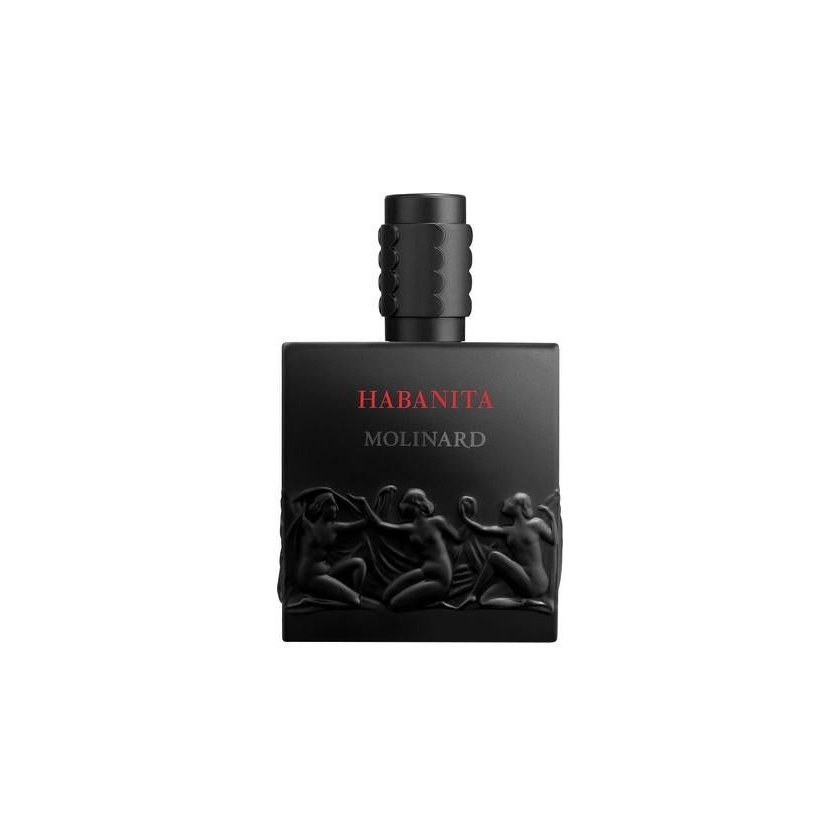
Even the ISPC (International Society of Perfumer-Creators), based in France, has aligned itself, replacing oriental with amber. Yet, just typing “oriental perfume” into a search engine reveals the importance of this family, with great successes such as Angel by Thierry Mugler and Black Opium by Yves Saint Laurent, presented as two “greedy orientals”. Naturally, the debate heats up off the record: “Orient is a vague term whose perception varies from civilization to civilization,” says the perfumer from a global fragrance house, who surveyed his colleagues about their understanding of the word. For Europeans, it refers to an area ranging from the Middle East to India. For India, it concerns everything east of its borders, namely China and Japan, countries that do not use this term. As for the perfumers of the Middle East, they are keen to keep this adjective, which, in their opinion, defines their style of perfumery, such as oud and attars. Moreover, they describe Shalimar as oriental to the European eye. It is true that Shalimar is the archetype of the genre, to the point that Guerlain presents it as “the first oriental perfume in history” on its website. The term “amber” (already) was replaced by “amber” at the end of the 1920s in order to be more accessible to the general public, especially the Anglo-Saxons, who are passionate about French fragrances. Advertising catalogs from that time bear witness to this. “For professionals, the first oriental fragrances date back to three symbols of our perfumery: Habanita by Molinard (1921), Émeraude by Coty (1922) and Shalimar by Guerlain (1925),” explains Isabelle Ferrand, president of the Cinquième Sens training organization in Paris. This terminology is explained both through the universe projected by their name and their advertising and through their olfactory similarities: sweet, amber-like notes, such as benzoin, cyste, and ambergris, as well as patchouli and spices. The amber note alone does not contain either patchouli or spices. For the time being, Cinquième Sens maintains the oriental family in its teaching, except in the United States, where students have the choice of using one of the two adjectives – oriental or amber. “We explain the history of perfumery and, although the word ”oriental“ has been used for several decades, it is difficult to eliminate it,” emphasizes Isabelle Ferrand. The Société française des parfumeurs, on the other hand, does not have to decide since its classification has always referred to an amber family; its president, Véronique Dupont, believes that the perfume called ”Oriental” is a historical and technical definition: “It is a promise of escape derived from the Orientalist artistic movement of the 19th century. For a whole generation of perfumers and consumers alike, it refers to an olfactory family comprising sensual fragrances with enveloping, slightly animalic undertones—think of the velvety facets of vanilla and patchouli, but also of notes of extracts from beaver or civet, common in the era.” Shalimar is unanimously considered a masterpiece.” Now the all-powerful notion of inclusivity no longer stops at non-gendered flavors or the choice of a consensual icon… In Grasse, a retired perfumer, surprised by such controversy, asks, in turn, whether “cancel culture” should not then take down all the odalisque paintings in museums. And is more concerned about climate change, which threatens the cultures of fragrant plants, than the American semantic debate.
Edition: February 2, 2022 P.28-31 Journalists: LAURENCE FÉRAT