Each fragrance is composed of several fragrances that harmonize perfectly, giving the perfume a theme. To achieve this perfect harmony, the perfumer must select from the many natural raw materials available to him.
In order to list these raw materials, they are classified according to their origin.
Aromatic raw materials
Aromatic herbs are not just for the kitchen. This category also includes herbs with lavender, anise or mint notes.
Lavender notes
Lavender, lavender, sage, rosemary, and thyme can be found here.
Lavender, with its herbaceous scent, is produced mainly in the south of our sweet France, just as lavender, which has a more spicy note. Both have a fresh and herbaceous scent. For many, lavender symbolizes purity.
Sage is mainly cultivated in Europe. Among the existing varieties of sage, the common sage is the one most frequently used by perfumers. Its scent is closer to earth and wood, although it has more floral and lavender notes.
The rosemary, meaning «sea mist» in Latin, originates from the Mediterranean region. Its fragrance is powerful and fresh with lavender notes. It is more commonly used in masculine perfumes.
Thyme is also native to the Mediterranean basin. Legend has it that it was born from a tear shed by Helen during the Trojan War. It was used by the Egyptians to embalm the dead and by the Greeks who burned it in front of the altars dedicated to the gods or in public places. Thyme is very easily identifiable by its warm and energetic scent.
Mented notes
Among the ten varieties of mint, perfumers use green (or pale) mint as well as spicy mint.
Green mint is essentially produced in the United States. It is believed to have originated from a nymph named Menthe, who was jealous of the wife of Hades and thus turned into a plant. Its menthol-like aroma is recognizable by all. It also has slightly acidic and herbaceous notes.
Peppermint is the result of a natural cross between green mint and water mint. Its note is powerful, cold and mentholated.
Menthols provide freshness and are commonly used in masculine fragrances.
Anise notes
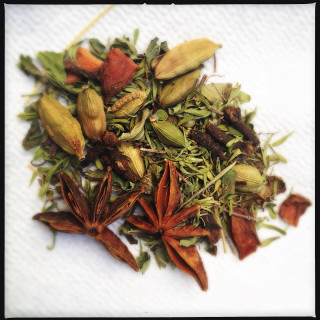
Among the aniseed spices processed by perfumers are star anise (or badiane), basil and tarragon.
Star anise, also known as badian, originates from Greece and Egypt and is mainly cultivated in China and Vietnam. It has an anise-like aroma, as well as a note of freshness and spice. Star anise is often used in masculine perfumes.
Basil is native to Egypt and is an essential ingredient in men’s perfumes. It is mainly grown in Mediterranean countries, but also in Lebanon and India. In addition to its aniseed scent, it also has herbaceous and fresh aromas.
Dill is mostly produced in France. It adds freshness and a aniseed note to perfumes.