They bring the freshness of the vast majority of fragrances and are essential to the palette of perfumers. Virtuous and natural, the citrus fruit varieties are subject to many variables. From the field to the perfume, the situation develops point by point.
Citrus fruits have been experiencing difficulties for a few years, linked to the ripening of the fruit, the reduction in cultivated areas, or unfavorable climatic conditions.
- Overall fruit production is declining
According to the U.S. Department of Agriculture, compared to the previous year, global citrus production in 2020-2021 showed an increase of +4%, with 98 million tons, with oranges representing half of the total, followed by mandarins, lemons/green lemons, and grapefruit. China is the largest producer, followed by Brazil and the European Union; the United States, on the other hand, has declining farms. The global production of oranges in 2020-2021 was on the rise, with +7% in Brazil and +60% in Mexico and +5% in the European Union. Those of mandarins, worldwide and in Europe, show an increase, mainly in Spain and Italy. The global production of grapefruit has decreased. As for lemon, it remained stable, with increases in Mexico, Europe and Turkey offsetting the declines in Argentina and the United States. The annual forecasts of the World Citrus Organization for 2021-2022, for the Northern Hemisphere show a fruit production that is down by 1.27% compared to the previous season, with a decrease of 3.45% for oranges, slight reductions for pomelos and sweet citrus fruits, while that of lemons increases by 5.64%. In the EU, the 2021-2022 projections indicate a decrease of -9.35% in Greece, -7.74% in Spain and -2.62% in Italy.
- Essential oils: the market dominated by orange and lemon
Global production of citrus essential oils is driven by orange and lemon, and is a byproduct of juice production. Those of lime, grapefruit, bergamot and mandarin are more anecdotal (Table 1). In volume terms, Brazil is the largest exporter of orange essential oil, followed by the United States and then Europe. For lemon, it is Argentina then Europe and the United States. French imports of orange and lemon essential oils from Brazil, Italy and Argentina are very significant in volume terms (Table 2), but in value terms, Italian lemon essential oil is the first (Table 3).
- Various applications for lemon essence
Lemon essential oil (Citrus limon (L) Burm.F) can be obtained by distillation, extracted from the juice during concentration, or by cold extraction of the peel of the fruit. Argentina and Spain are making efforts to reduce the use and impacts of pesticides. China and India are very large producers, but the production of essential oil is negligible, while Argentina and Spain supply about 70% of the global amount of lemon essential oil. The latter, the largest European supplier, accounts for 20 to 25% of the global quantities, with plantations mostly in the south of the country, and for the last ten years, an increasing organic cultivation. In the United States, California dominates the market, but water is the major problem. Mexico combines lemon/green lemon, with a predominance for the latter. And in South Africa, the productions are quite versatile. The quality criteria of the essential oil vary, as do the uses. It is used in flavors, perfumes, aromatherapy, medicines and cosmetics, agriculture and animal feed. In household products, lemon essential oil is interesting for its disinfectant, deodorizing properties or its ability to dissolve grease and waxes.
- Italian citrus fruits, a guarantee of quality
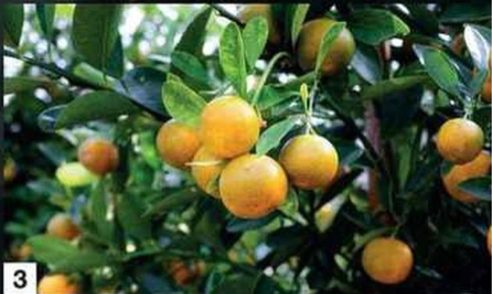
Italy is the third largest producer of lemons in Europe, 85% of which come from Sicily; the rest of the crops are found in Calabria and a little in Amalfi, as follows: Femminello Commune 53%, Monachello 10.2%, Zagara bianca 23.5%. In Sicily, Femminello accounts for 75% of the local crop. The harvests take place in November to early June; the green fruits in the early season give the quality Primofiore, in spring between April and June it is Bianchetto, and in summer Verdello from June to September. The essential oil is extracted by molecular distillation or fractionating techniques, giving tailor-made qualities without furocoumarins or more concentrated ones. The «citron de Syracuse, Femminello» benefits from a Protected Geographical Indication (IGP). For bergamot essential oil (Citrus bergamia (Risso & Poit.), Italy is the world’s leading producer with three cultivars: Femminello, Fantastico, Castagnaro, on an area of approximately 1,400 hectares. The «Bergamotto Reggio di Calabria» (Photo 5) benefits from a Protected Designation of Origin issued by the European Union and represents 95% of the world production. Over the last five years, the area under cultivation of this citrus has increased by about 20%. The harvest begins in winter, from late November to February; the essential oil is obtained by solvent extraction, torchio or spugna, and is deodorized by molecular distillation; its olfactory profile varies according to the stage of fruit maturity: green or yellow; the juice has health benefits, but its consumption is modest. On a total area of 2,800 to 3,000 hectares, mandarin orange (Citrus reticulata) is produced, with four varieties: Ciacullin Marzole, Avana, Commune, in Calabria and Sicily, in the Palermo plain. The green quality harvest takes place in September and October, and is intended for the flavor and perfume industries. The yellow mandarin is harvested in November, and the red in December and January. The Avana mandarin is among the more common varieties, with a rind rich in essential oil, obtained by extracting the zest using a peeler, or by a grinder (grinding the whole fruit). The cultivar «Mandarine Tardivo di Ciaculli», an agricultural territory of origin in the Conca d’Oro region, in the Palermo area, ripens later, in February-March. The red oranges Torocco, Moro and Sanguinello (Citrus sinensis L.Osbeck), grown at the foot of the Etna volcano in the regions of Catania, Syracuse and some territories of the province of Enna, benefit from the IGP «Arancia Rossa di Sicilia»; this applies to 6,500 ha certified. The orange has a slightly rough peel, initially green, then yellow, orange and reddish depending on maturity (Photo 6).
- Sustainability at the heart of the industry
With nearly 40,000 hectares reserved for the organic segment in 2019, Italy is the world’s leading producer of organically grown citrus fruits in open ground, while Mexico, which is much larger, ranks second with 12,570 hectares dedicated to this segment (Table 4). Despite larger areas dedicated to agriculture, organic cultivation of mandarins and oranges in countries like the United States and China does not exceed 5,000 hectares. In Spain, the areas planted with organic crops are well distributed between Andalusia, the regions of Murcia and Valencia, and Catalonia. The Agrobios development center, which supports the Les Acteurs du Vivant label certified by the Veritas bureau, explains it this way: «In recent years, customers have demanded greater traceability, right down to the fields and the producers, with their very comprehensive specifications.» The action plans therefore move towards responsible agriculture, with third parties such as the Union for Ethical Bio Trade (UEBT) or NGOs. He adds: «Demand for bio qualities is increasing significantly in the perfume industry, but the value of this more expensive quality is not being promoted, so the standard product remains largely used.» Gianfranco Capua, president of the eponymous company, explains: «In Italy, we have established a chain of procedures and sustainable protocols, particularly regarding pesticides, in order to obtain grams of essential oils that comply with the latest European and global standards on health and the environment, as well as methods that allow for organic certification.» For all citrus fruits, the Italian chains are improving in terms of sustainability: water resource savings, technological support for farmers, and a massive reduction in CO2 emissions.
- Properties in aromatherapy
According to Mintel GNPD, 25% of fragrance launches had botanical and plant-based claims higher than the previous four years, and 13% had aromatherapy claims (September 2017 to August 2021). In France, the pharmacy is the preferred place of purchase by consumers of aromatherapy, both for pure essential oils and products formulated as food supplements, cosmetics or ambient perfumes, especially in organic qualities for lemon and orange essences. The global market for citrus essential oils is expected to generate a maximum revenue of 4,907.12 million dollars (4,341.60 million euros) by 2028, according to Research Dive, with intensive use of citrus essential oils for their antibacterial properties.
- The hespridi in perfumery
Although citrus fruits are known for their sparkling character, technological innovations allow perfumers to create more persistent concentrated essences that bring characteristic effects to the heart notes. «Demand is moving towards qualities with more roundness and freshness, reminiscent of the fruit in the field. To achieve this, the selection of fruits and the terroir are crucial, as is the degree of ripeness. The choice of extraction and processing methods allows for broadening the range of essences by removing furocoumarins or by de-tartarizing, which gives more concentrated citrus fruits that express their own typical molecules and are in line with reducing environmental impacts,» explains Cyril Gallardo. «The hesperidins represent a natural, energizing movement, a desire for freshness coupled with a powerful lingering effect. New extracts, and citrus fruits such as yuzu and kumquat are reinvented in unprecedented variations, layered with crunchy green accents, worked with notes of tea and fresh spices, such as the Timur pepper (Photo 8) with its grapefruit twist, or the Forest Pepper with zesty mandarin notes that prolong the freshness» (Photo 9), illustrates Julie Massé, perfumer at Mane (Photo 10).
- Modern colognes
Mathilde Lion, beauty expert at Europe The NPD Group, explains: «For the cumulative period from January to September 2021, in Europe as a whole, colognes increased by +4% in value compared to 2020 (and -29% compared to 2019), a performance well below that of perfumes overall, which rose by +13% vs. 2020. The current trend in Europe is marked by an increase in the strongest concentrations, such as eau de parfum and extracts. Colognes, which are much less concentrated, are growing less quickly.» Isabelle Ferrand (Photo 11), President of Cinquième Sens, notes a decrease in the number of single launches within the hespirid fragrance family over the past two years, in favor of lines and new olfactory universes in the hespirid category. Thus, Courrèges with its Imaginaires colognes, Le Couvent and its Colognes by Mugler (Photo 12). The latest trends highlight new twists with citrus notes: green facets, like green foliage with mint notes, white musks, woods, or even marine accords like Calone. Some brands emphasize raw materials, such as Bergamote Calabria, Mandaraine Basilic from the Aqua Allegoria collection by Guerlain, or Occitane with Verveine Agrumes and Verveine Mandarine. Cinq mondes has launched a range of other aromatic eaux de cologne. The family fragrances Bien-Être or Mont Saint Michel (Envion 4€ for 250ml) add variations to their traditional formulas, such as two certified Cosmebio offerings with the Eau de Bien-Être, available in two versions (approx. 9.20€ for 75ml) (Photo 13). Leclerc’s €co+ brand, for its part, offers three cheap colognes at 1.44€ per liter. With their easy and reassuring reading, the hespidars inspire confidence in a demanding clientele, and the citrus sector and a model, through its circular economy strategy, its ecological and sustainable progress, focused on innovation and the future.